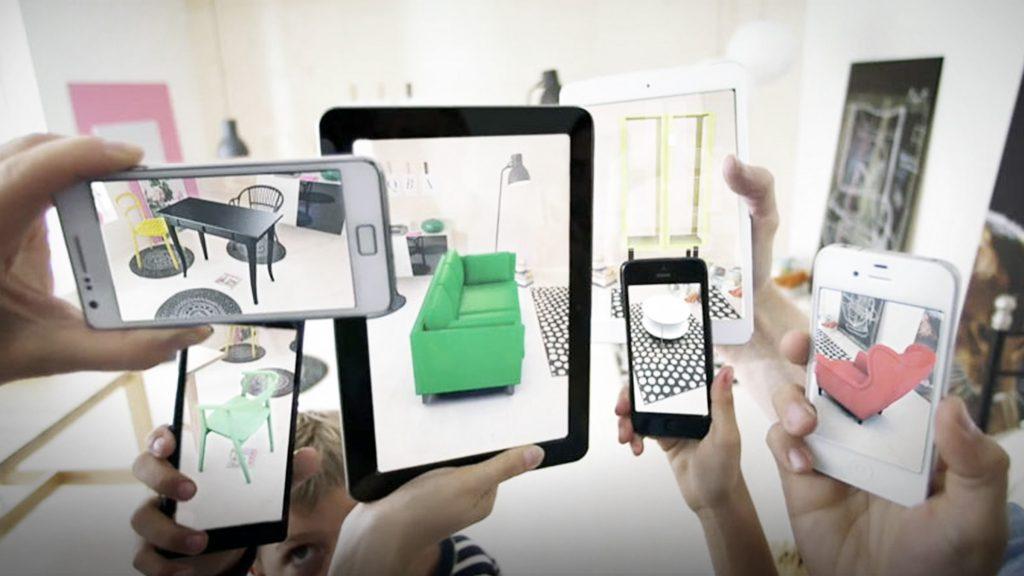
Unseen Realities: How AR Glasses Are Reshaping What It Means to See the World

The Dawn of a New Visual Era: Augmented Reality Glasses
For centuries, human vision has been limited to the natural capabilities of the human eye—perceiving light within a narrow spectrum and interpreting the world through a fixed frame. Yet, as technology evolves, so too does our capacity to see. Augmented reality (AR) glasses, once a staple of science fiction, are now emerging as a transformative tool, not just by overlaying digital information onto the physical world, but by fundamentally altering what it means to *see* in the first place. These devices are not merely gadgets; they are portals to unseen realities, redefining perception, accessibility, and human interaction with the environment.
At their core, AR glasses blend the real and the virtual, creating a hybrid layer of experience that enhances, annotates, and sometimes even conceals the world as we know it. Unlike virtual reality, which immerses users in entirely synthetic environments, AR glasses maintain a connection to the physical space while enriching it with contextual data. This subtle yet profound shift is opening doors to applications that span education, healthcare, industrial work, and everyday life—ushering in an era where seeing is no longer passive, but active, informed, and infinitely expandable.
The Mechanics Behind the Magic: How AR Glasses Work
To understand the impact of AR glasses, it is essential to grasp the technology that powers them. At the foundation lies a sophisticated interplay of sensors, processors, displays, and software, all working in unison to merge digital content with the user’s field of vision.
Most AR glasses employ a combination of optical see-through displays and sensors such as cameras, gyroscopes, accelerometers, and depth sensors. These components work together to map the user’s surroundings in real time, detect objects, and render contextual information—such as directions, text, or 3D models—directly onto the user’s field of view. Advanced models integrate eye-tracking technology to enhance interaction, allowing users to select or activate features through gaze alone.
Another critical innovation is spatial computing, which enables AR glasses to understand and interact with the three-dimensional environment. Using simultaneous localization and mapping (SLAM), these devices build a dynamic digital model of the space around them, allowing virtual objects to remain anchored in place as the user moves. This creates a seamless, immersive blend of real and augmented reality.
Moreover, cloud connectivity plays a pivotal role. Many AR glasses rely on cloud-based AI to process complex data—such as language translation or object recognition—offloading heavy computational tasks from the device itself. This not only improves performance but also ensures that the glasses can access vast databases and learning models in real time.
Transforming Education: Learning Through a New Lens
The classroom of the future is no longer a static space of textbooks and chalkboards, but a dynamic, interactive environment where knowledge is visualized, explored, and experienced in three dimensions. AR glasses are beginning to revolutionize education by making abstract concepts tangible and making learning accessible to all.
Imagine a biology student wearing AR glasses while dissecting a virtual frog—every layer, organ, and system can be peeled back, labeled, and explained in real time. Or consider a history class where students stand in a classroom and watch ancient civilizations rise and fall before their eyes, with events unfolding in their immediate surroundings. These are not distant fantasies; they are already being prototyped and implemented in schools and universities worldwide.
- Spatial Learning: AR glasses help learners visualize complex spatial relationships—such as molecular structures or architectural blueprints—by rendering them in 3D space around the user.
- Accessible Education: For students with visual or cognitive impairments, AR can provide audio descriptions, color overlays, or simplified visual cues, making content more accessible.
- Engagement and Retention: Interactive, game-like learning experiences increase student engagement and improve retention rates by making education more immersive and memorable.
Institutions like Harvard and MIT have already begun integrating AR into their curricula, signaling a shift toward experiential learning. As AR glasses become more affordable and widespread, they have the potential to democratize education, bringing high-quality, interactive learning to students regardless of geographic or socioeconomic barriers.
Revolutionizing Healthcare: Seeing Beyond the Surface
In medicine, precision is everything—and AR glasses are becoming a vital tool for surgeons, diagnosticians, and patients alike. These devices are enabling healthcare professionals to see what was previously invisible: real-time data, anatomical overlays, and procedural guidance, all superimposed directly onto the patient or surgical field.
During complex surgeries, AR glasses can display a patient’s internal anatomy—such as blood vessels, nerves, or tumors—based on pre-operative scans. This allows surgeons to navigate with unprecedented accuracy, reducing risks and improving outcomes. In emergency rooms, paramedics wearing AR glasses can receive vital patient data—allergies, medications, vital signs—without taking their eyes off the scene, ensuring faster, safer care.
- Surgical Navigation: AR glasses provide real-time guidance during operations, highlighting critical structures and potential hazards.
- Remote Consultations: Doctors can share visual annotations with patients or colleagues during consultations, enhancing communication and diagnosis.
- Rehabilitation and Therapy: For stroke patients or those recovering from injuries, AR can guide physical therapy exercises and track progress through visual feedback.
Beyond clinical applications, AR glasses are also empowering patients by providing personalized health insights. For example, individuals with diabetes can receive real-time glucose level overlays or insulin dosage recommendations through their glasses, turning data into actionable, visual guidance.
Empowering the Workforce: From Factory Floors to Construction Sites
The industrial sector stands to gain enormously from AR glasses, where efficiency, safety, and precision are paramount. These devices are transforming how workers interact with machinery, instructions, and their environment, reducing errors and accelerating productivity.
In manufacturing, technicians wearing AR glasses can receive step-by-step repair instructions overlaid directly on the equipment they are servicing. This hands-free guidance minimizes downtime and ensures that even complex procedures are executed correctly. Similarly, warehouse workers can use AR glasses to locate and pick items with pinpoint accuracy, guided by digital arrows and inventory data projected onto their field of view.
- Remote Assistance: Experts can guide on-site workers through live video and annotations, even from thousands of miles away.
- Safety Alerts: AR glasses can highlight hazards—such as unstable structures or high-voltage zones—alerting workers before they enter dangerous areas.
- Training and Simulation: New employees can practice complex tasks in a safe, virtual environment before operating real machinery.
Companies like Boeing, Siemens, and DHL have already adopted AR glasses in their operations, reporting significant improvements in efficiency and safety. As these devices become more robust and affordable, they are poised to become as essential as a hard hat or a safety vest on the modern worksite.
Everyday Life: Enhancing the World Around Us
While AR glasses hold immense potential in specialized fields, their most profound impact may be in reshaping daily life for millions of people. From navigation to communication, these devices are quietly redefining how we interact with the world.
Imagine walking through an unfamiliar city with AR glasses that translate street signs, menus, and conversations in real time. Or attending a concert where lyrics and artist information float above the stage, synchronized to the music. For travelers, AR can provide historical context as they explore landmarks, turning every walk into an interactive tour.
- Navigation: Real-time directional cues and points of interest are projected onto the environment, making it easier to find destinations without constantly looking at a phone.
- Social Interaction: AR glasses can display helpful information about people—such as their names, job titles, or shared interests—during conversations, enriching social exchanges.
- Accessibility: For individuals with visual impairments, AR can describe surroundings, identify objects, and even recognize faces, offering a new level of independence.
Moreover, AR glasses are fostering new forms of creativity. Artists, designers, and architects can visualize and manipulate 3D models in real space, collaborating remotely with others who see the same augmented environment. This blurs the line between physical and digital creation, opening up possibilities for entirely new art forms and design methodologies.
The Challenges and Ethical Considerations
Despite their transformative potential, AR glasses are not without challenges. Privacy, data security, and ethical concerns loom large as these devices become more integrated into daily life. The ability to capture, analyze, and transmit visual data in real time raises questions about consent, surveillance, and the ownership of personal information.
Who owns the data collected by AR glasses—the user, the device manufacturer, or the cloud service provider? How can individuals ensure that their surroundings are not being recorded without permission? These questions are not merely technical but deeply social, requiring robust legal frameworks and ethical guidelines.
- Privacy Risks: Constant recording and facial recognition capabilities could lead to unintended surveillance or data breaches.
- Digital Overload: The constant influx of information may overwhelm users, leading to distraction or cognitive fatigue.
- Social Disconnection: As people increasingly focus on digital overlays, there is a risk of diminished real-world interactions and empathy.
Addressing these issues will require collaboration between technologists, policymakers, and civil society. Transparency, user control, and ethical design must be prioritized to ensure that AR glasses enhance—not erode—human dignity and autonomy.
The Future: A World Seen Through New Eyes
The journey of AR glasses is still in its early chapters, but the trajectory is undeniable: they are on track to become as ubiquitous as smartphones, reshaping how we perceive, learn, work, and connect. The next decade will likely see major advancements in miniaturization, battery life, and AI integration, making these devices lighter, smarter, and more intuitive.
We may soon live in a world where “seeing” means more than just looking—where every glance is an opportunity to learn, explore, or create. AR glasses could redefine literacy, not just as the ability to read text, but to interpret and interact with a world rich with digital meaning. They may even challenge our understanding of reality itself, prompting us to ask: What is real when the boundaries between the physical and the digital dissolve?
As we stand on the brink of this new visual frontier, one thing is clear: AR glasses are not just changing how we see the world—they are changing what it means to be human in a world where perception is no longer limited by biology, but expanded by technology.